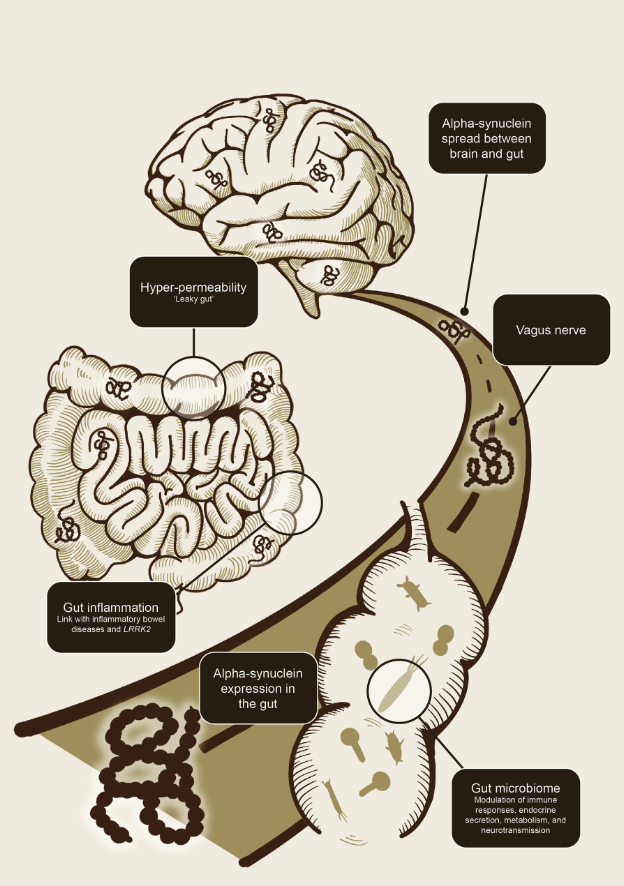


The gut-brain axis (GBA) is the “brain in your gut”, also known as the enteric nervous system (ENS). It functions on the idea that what you eat affects your mood, and not the other way around. Anxiety and depression are often linked to irritable bowel syndrome (IBS), constipation, and diarrhea. The GBA has been implicated in many neuropsychiatric disorders, especially for major depressive disorder (MDD). Clinical targets for the GBA include targeting neuropsychiatric disorders, neurodegenerative diseases, and gastrointestinal-brain disorders.
- Neuropsychiatric disorders: autism spectrum disorder (ASD), ADHD
- Neurodegenerative disorders: Alzheimer’s disease, Parkinson’s disease
- Gastrointestinal-brain disorders: Irritable bowel syndrome (IBS), functional dyspepsia
Drug Intervention:
- Monoamines, neurotransmitters derived from aromatic amino acids, such as selective serotonin reuptake inhibitors (SSRIs) and selective norepinephrine reuptake inhibitors (SNRIs), have been used to treat depression by boosting neurotransmitter levels in the brain.
- Probiotics:
Prebiotics are live microorganisms that have been used to treat constipation, IBS, and diarrhea. The class of probiotics used to treat neuropsychiatric disorders is called “psychobiotics”. Probiotics enhance short-chain fatty acid (SCFA) metabolism, control gut microbial composition, and restore the intestinal and blood-brain barriers (BBB), thereby reducing microglial activation and neuroinflammation.
- Postbiotics:
Postbiotics are the nonliving version of prebiotics. They include inanimate microorganisms, microbial cell parts, metabolite byproducts of the digestion of fiber and nutrients by healthy gut bacteria. Examples of postbiotics include vitamins B and K, amino acids, and antimicrobial peptides, which help slow the growth of harmful bacteria.
Postbiotics mitigate neuroinflammation and promote balanced microbiota, reducing the risk of disorders such as autism and ADHD. They also enhance neurotrophic factors, like brain-derived neurotrophic factor (BDNF), strengthening neuronal growth and synaptic plasticity.
Fecal Microbiota Transplantation (FMT):
FMT is a medical procedure that transfers stool from a healthy donor to another patient’s gastrointestinal tract, performed by gastroenterologists during colonoscopies. This procedure is typically performed to restore healthy bacteria in the lower intestinal tract and prevent C. diff, which can cause fever and diarrhea.
There is evidence to suggest that FMT may improve ASD behavioral and gastrointestinal symptoms, depression, and stress resilience. Thus, FMT may be used as a microbiome therapeutic to improve mood. This is further evidenced by the fact that the implanted healthy bacteria in the gut generate SCFAs and improve immune responses to malignant bacteria.
However, there are safety concerns to FMT regarding pathogen transfer and long-term dysbiosis, the imbalance in the type of microorganisms. Scientists are seeking more precise methods to prevent such symptoms while maintaining the same methodology, such as targeted bacteriotherapy.
Sources:
https://www.hopkinsmedicine.org/health/wellness-and-prevention/the-brain-gut-connection
https://www.sciencedirect.com/science/article/pii/S1043661822003176
https://pmc.ncbi.nlm.nih.gov/articles/PMC12883760
https://www.frontiersin.org/journals/pharmacology/articles/10.3389/fphar.2026.1826681/full
