

Overview
What is a therapeutic vaccine? It is an umbrella term used to refer to any vaccine administered after a disease has already been introduced to an individual. This is why they are used in response to viral infections, when the body cannot produce efficient antibodies to combat the disease.
This is different from the more common prophylactic vaccines, which are administered in an attempt to prevent certain diseases and illnesses from ever being introduced to an individual’s system.
At the moment, therapeutic vaccines available commercially are centered on combating different types of cancer. Sipuleucel-T (Provenge) is a prostate cancer treatment, TheraCys (Bacilius Calmettle-Guerin) treats bladder cancer, and T-VEC treats melanoma (skin cancer). Provenge was the first to be approved by the FDA, in April of 2010. However, due to its incredibly complex manufacturing process (alongside issues with insurance), it led to massive financial failure, due to the price tag of the treatment being more than $90,000 upfront when first introduced to the market.
Various Vaccines
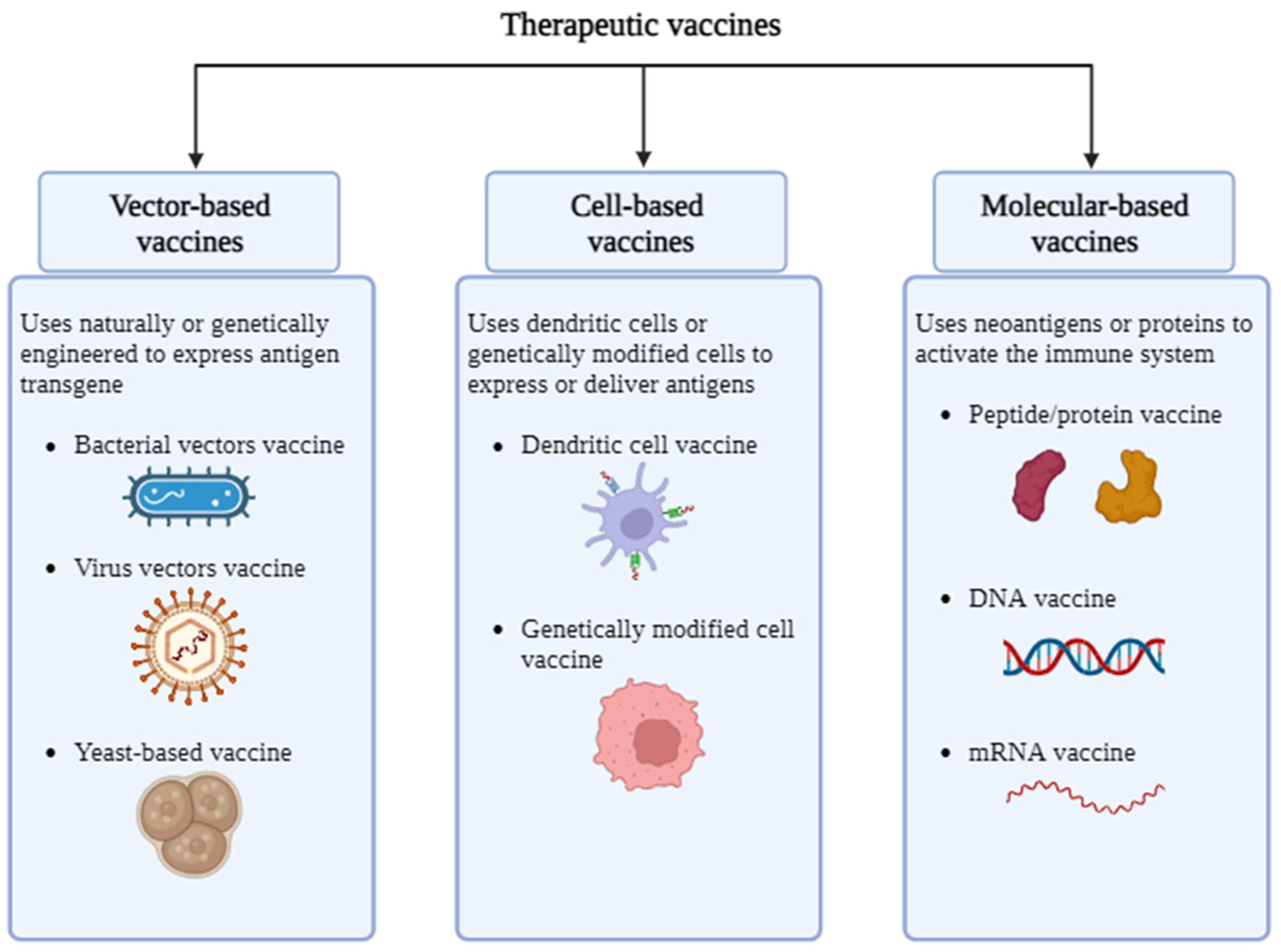
Cell-based, vector, and molecular-based vaccines are the big three categories of therapeutic vaccines in development today.
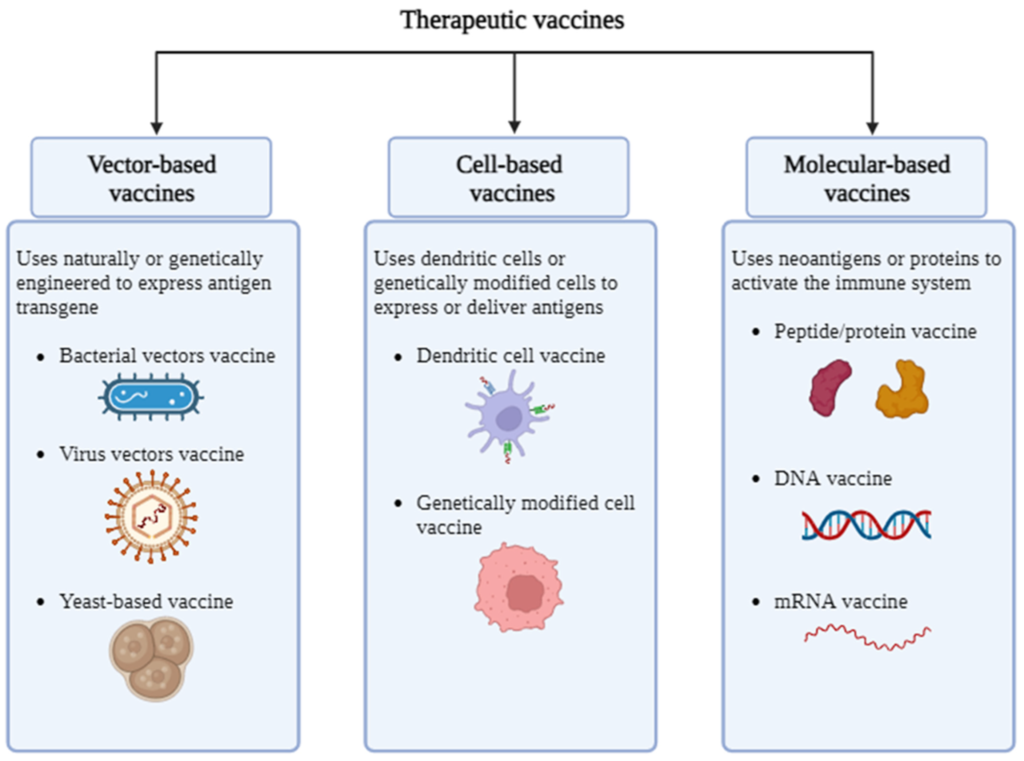
Image Credit: HBV Vaccines: Advances and Development – MDPI
Cell-based: Vaccine viruses are grown in tissue culture of select cells (typically mammalian). The virus strain then replicates within the cell it is grown in. Scientists eventually harvest the virus antigen from the surface of the cell, which can be safely introduced into a patient to induce the immune system into fighting the illness.
Vector: A safe, modified version of a virus different from the one in the body is genetically modified to include some DNA from the target disease. After introduction to the body, cells begin manufacturing the target protein and building antibodies to combat the illness.
Molecular: Unlike traditional vaccines that introduce a harmless part of a virus or bacteria to the body, molecular vaccines operate on mRNA. This mRNA is encased in a lipid nanoparticle while it enters the system. Afterwards, the mRNA blueprint is released directly into the cytoplasm, triggering the development of the target viral protein. Later, if this protein is ever detected, it is recognized as a foreign invader. This is the most common type of therapeutic vaccine being currently developed in labs.
Sources
Therapeutic Vaccines for Chronic Viral Infections – MDPI
Therapeutic vaccines: Realities of today and hopes for tomorrow
Shot of the Future: Trends in Therapeutic Vaccines
