

What are Engineered Bacteria Consortia?
Engineered bacteria are programmed through gene editing techniques so bacteria can target specific diseases. These microrobots serve to diagnose diseases and deliver treatments. This includes the bacteria being programmed to combat cancer cells, and this treatment minimizes harm to healthy tissues and allows for no unnecessary drug use. After the strains are created, culturing (the laboratory process of growing cells) and reproducing the bacteria is cost-effective and easy to scale up. These engineered bacteria may be used individually or as microbial consortia. Consortia is when a group of different organisms work together toward the same goal. This allows for improved diagnostic accuracy and treatment efficacy. The development of these engineered bacteria represents a strong advancement toward personalized medicine.
What are Anti-Inflammatory Cytokines?
Anti-inflammatory cytokines are signaling proteins that help defend an immune system against germs. They aid in controlling inflammation. Inflammation is a sign that immune cells are fighting against “invaders,” or healing tissue damage. Cytokines are released when the body believes there is a threat, and they tell immune cells how to fight the threat and repair injuries. Cytokines are chemical messengers that instruct cells. However, too many cytokines can cause excess inflammation and autoimmune diseases.
What is Inflammatory Bowel Disease?
Inflammatory bowel disease (IBD) is a chronic and recurring inflammatory condition of the gastrointestinal tract (the gastrointestinal tract is where food passes through, gets processed, and converts to waste). This disease can develop due to a combination of genetic susceptibility, environmental factors, issues with the immune system, and alterations in bacteria living in the gut.
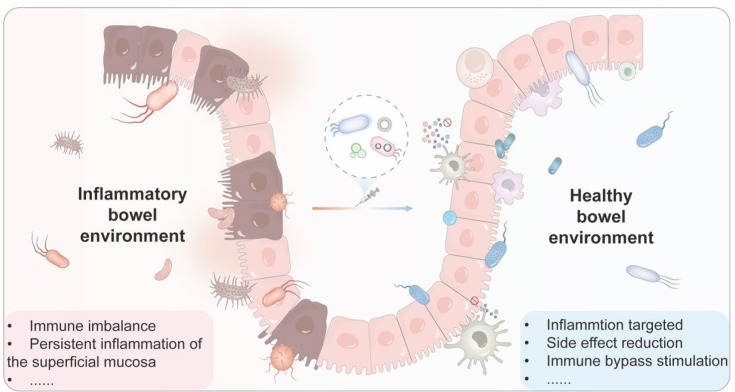
An image demonstrating how engineered bacterial therapy improves the efficacy of IBD treatment. VIA Figure 2
Why is This New Treatment Necessary?
Inflammatory bowel disease is inadequately treated by today’s therapies. These therapies lack targeting specificity and have significant side effects. They fail to address the process of healing the gut lining, as well as having a healthy amount of bacteria in the digestive tract. Today, single-intervention approaches also often show limited efficacy and durability. Due to these issues, engineered bacteria consortia for localized delivery of anti-inflammatory cytokines is the necessary future for IBD.
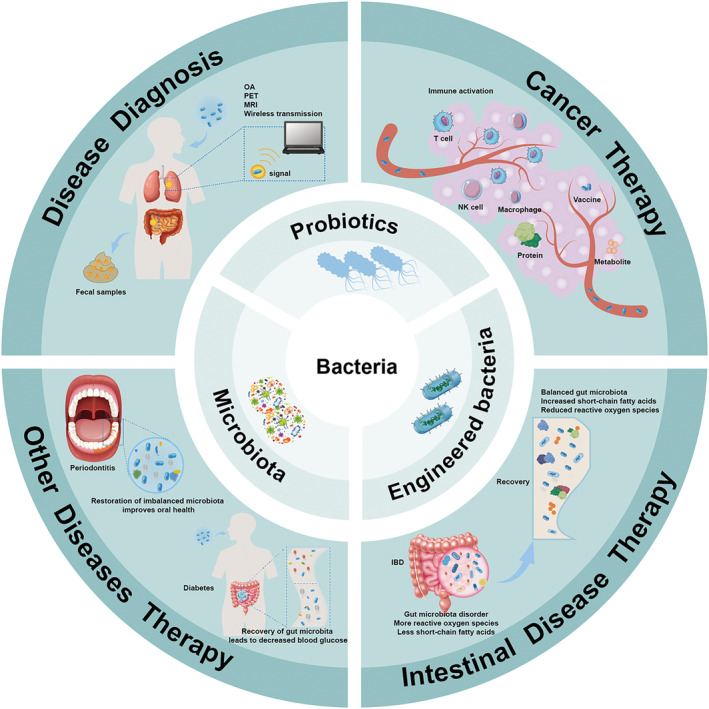
An image of engineered bacteria’s relationship with IBD. VIA Figure 1
What is the Outlook on the Future?
While there have been countless advancements, challenges still exist. Ensuring the long-term safety and survival of the bacteria, developing new gene editing technologies for non-model strains, understanding bacterial interactions with the host microbiota, and minimizing the potential toxicity are the future obstacles to overcome. However, the FDA has approved some engineered bacteria for medical application. This includes Vivotif, an oral typhoid vaccine, and Vaxchora, an oral cholera vaccine. There are promising outcomes in preclinical studies due to advances in synthetic biology, such as gene expression regulation and genome editing. But so far, no engineered bacteria have been approved for diagnostic or therapeutic purposes. These clinical advances demonstrate the potential of bacterial therapies in addressing difficult diseases.
Sources:
https://www.sciencedirect.com/science/article/pii/S2589004226008588#abs0010
https://pmc.ncbi.nlm.nih.gov/articles/PMC11725985
