

Gene Therapy & Transplants
Gene therapy is the practice of introducing nucleic acids, DNA and RNA, into cells to change one or more genes. This is used to observe differences in an individual’s cellular and overall physiology. Gene therapy is most commonly used to treat disorders and genetic conditions, and by altering genes, these conditions have the potential to be cured.
For many years, the common and preferred method of practicing gene therapy was to use allogeneic stem cells, which are stem cells from the same species. Stem cells are specialized cells that can differentiate into various cell types. For example, mesenchymal stem cells (MSCs) can differentiate into various types of bone cells. This powerful tool is often obtained from another individual’s blood. However, proper differentiation is often not achieved, and compatible donors are hard to come by. As an alternative, gene therapy is shifting towards using the patient’s own blood stem cells, called hematopoietic stem/progenitor cells (HSPCs). This method is called autologous stem cell transplantation (ASCT) or hematopoietic stem cell transplantation (HSCT).
Treated Disorders
Autologous stem cell transplants are used to treat more than 75 blood cancers and conditions, including leukemias, lymphomas, and sickle cell disease. It’s also been used to treat autoimmune diseases such as multiple sclerosis (MS), Crohn’s disease, and lupus.
A relatively recent development is the use of ASCT to treat metabolic disorders, such as lysosomal storage diseases (LSDs) and peroxisomal storage diseases (PSDs), as well as mitochondrial diseases. Lysosomes have been found to regulate energy metabolism via calcium signaling. Peroxisomes break down toxins and fatty acids. Mitochondria, commonly referred to as “the powerhouse of the cell, ” are the cell’s main source of producing energy, and disorders involving the mitochondria can become catastrophic. These organelles are often the primary targets in stem cell therapy for metabolic disorders. The main focus in treating metabolic disorders is currently on developing therapies for diabetes.
Treatment
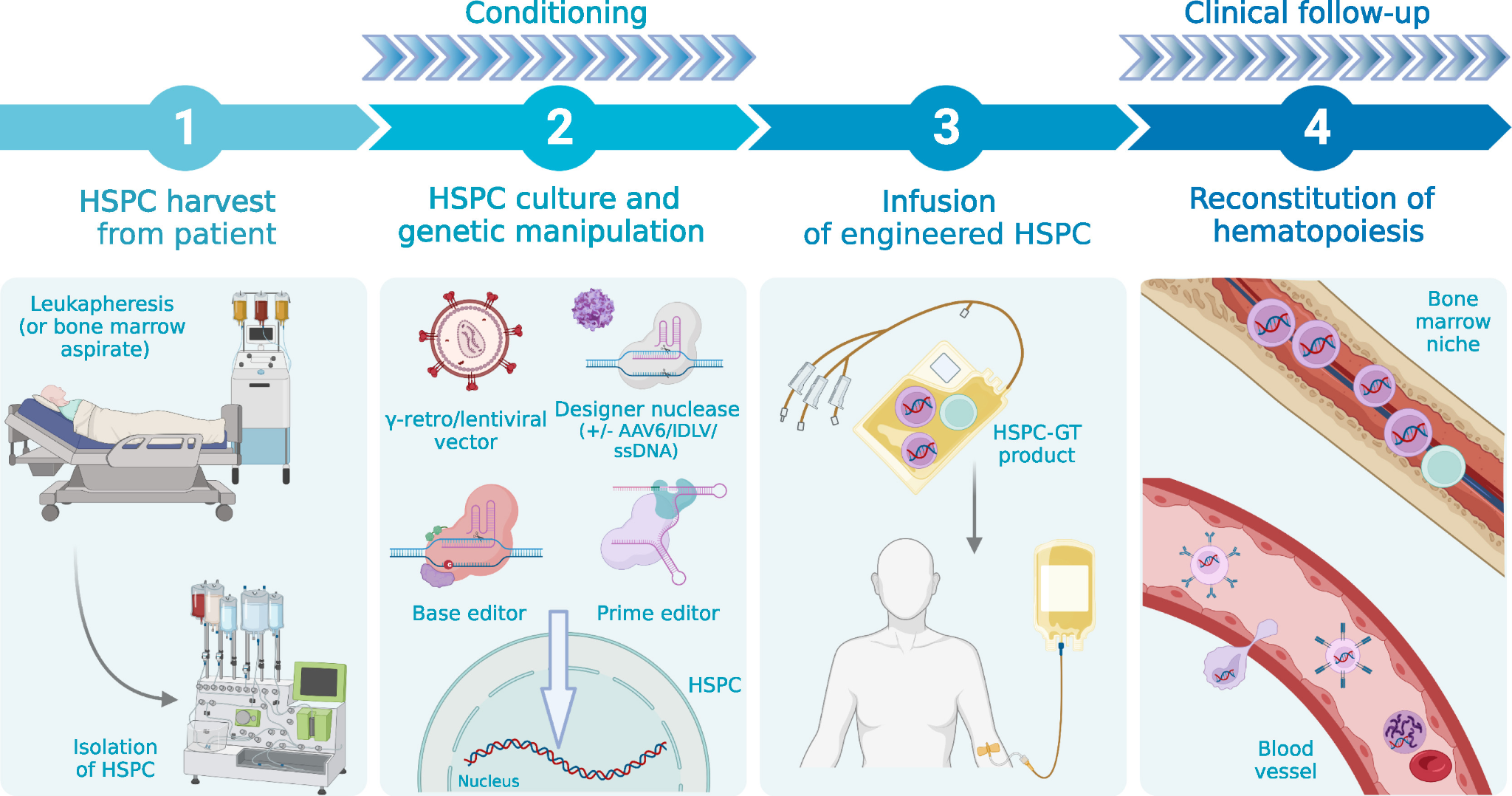
For both allogenic and autologous stem cell therapy, the treatment is almost identical. For autologous stem cell transplantation, hematopoietic stem cells are extracted from the patient and gene-edited to the desired genotype using tools such as CRISPR-Cas9. The patient must be prepared to receive the stem cells once again, so they undergo mild chemotherapy or radiation therapy in a process called conditioning. This helps kill cancer cells in patients. Conditioning also creates space in the bone marrow to transplant the gene-edited HSPCs back into the patient.
Autologous vs Allogenic (Advantages & Disadvantages)
Autologous stem cell transplants carry no risk of foreign body rejection, as the patient’s immune system recognizes the stem cells as the patient’s own. Furthermore, there is an avoidance of graft-versus-host disease (GHVD), a condition where donor cells attack healthy organs and cells. For allogeneic transplants, a donor must be found. This process is not required for autologous transplants, thereby saving time and resources.
However, there are also certain disadvantages. With donor cells, the patient’s cells attack lingering cancer cells. This same effect isn’t achieved with autologous stem cells. Furthermore, the graft given to the patient may contain small amounts of undetected cancer cells. For both treatments, the patient must undergo chemotherapy, which causes many severe side effects and discomfort. Too much chemotherapy can even damage the bone marrow, making it difficult to harvest healthy stem cells.
Sources:
- https://pmc.ncbi.nlm.nih.gov/articles/PMC6834641/
- https://www.mayoclinic.org/tests-procedures/autologous-stem-cell-transplant/about/pac-20607697
- https://pmc.ncbi.nlm.nih.gov/articles/PMC6824291/
- https://www.henryford.com/services/transplant/stem-cell/types-of-stem-cell-transplant-and-cellular-therapy/autologous
- https://www.ncbi.nlm.nih.gov/books/NBK12844/
