

Overview of Extracellular Vesicle Therapeutics
To begin with, a vesicle is a small sac filled with liquid and is created by a membrane. Vesicles can be programmed to carry drugs to cells in the human body. Specifically, Extracellular vesicles (EVs) have substantial biocompatibility, low immunogenicity and great bioavailability. Therefore, extracellular vesicles are known to be novel candidates for drug delivery systems. EVs are usually of nanometric size.
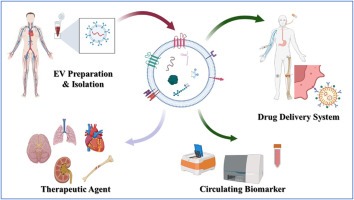
Credits – Extracellular vesicles: The future of therapeutics and drug delivery systems
Future of Drug Delivery Systems
Extracellular vesicles play an important role in major pathological and physiological processes. Examples include cancer progression, homeostasis, infection progression, and cardiovascular diseases. Research on extracellular vesicles has provided new information on oncogenesis and of how cells communicate to one and another.
Development of Extracellular Vesicles
Research also proves how Extracellular Vesicles also possess RNA that can be transmitted to target cells independently. Studies in extracellular vesicles have been substantially increasing since 2010.
Exosomes
Exosomes are small extracellular vesicles that are released into the extracellular environment through cells. Exosomes perform important roles between cells in intercellular communication. They have the ability to transport various nucleic acids, proteins, lipids, and substances.
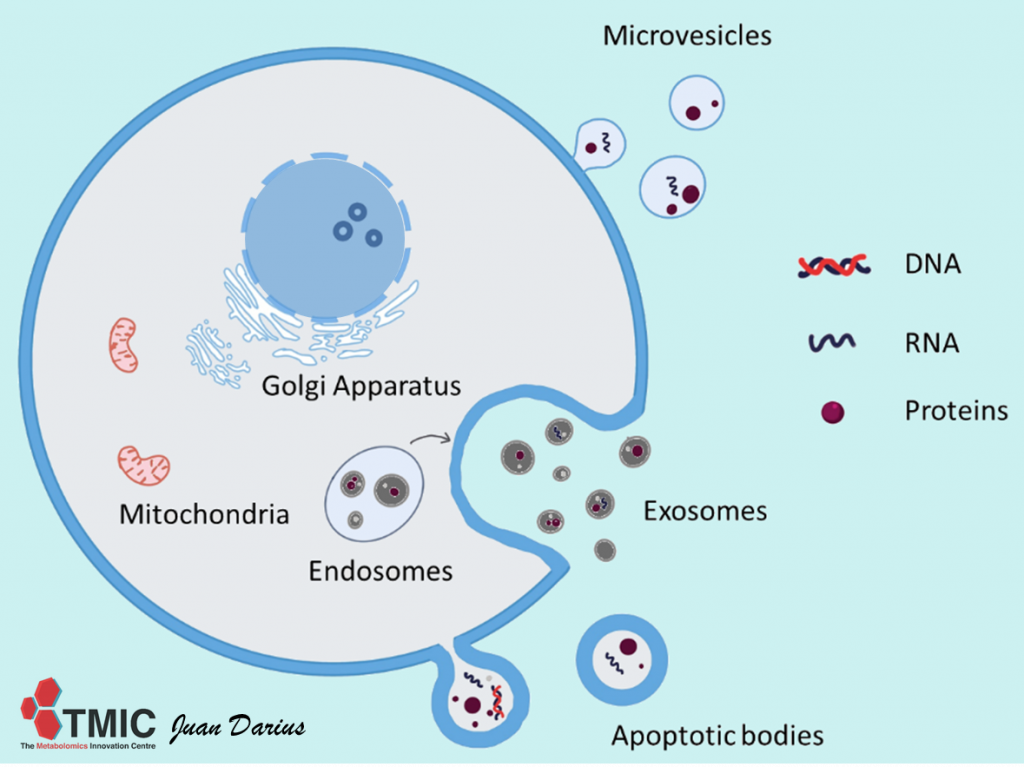
Credits – Extracellular Vesicles (EVs) 101
Sources:
https://www.cancer.gov/publications/dictionaries/cancer-terms/def/vesicle
https://pubmed.ncbi.nlm.nih.gov/33271883
https://www.sciencedirect.com/science/article/pii/S2949866X24000273

