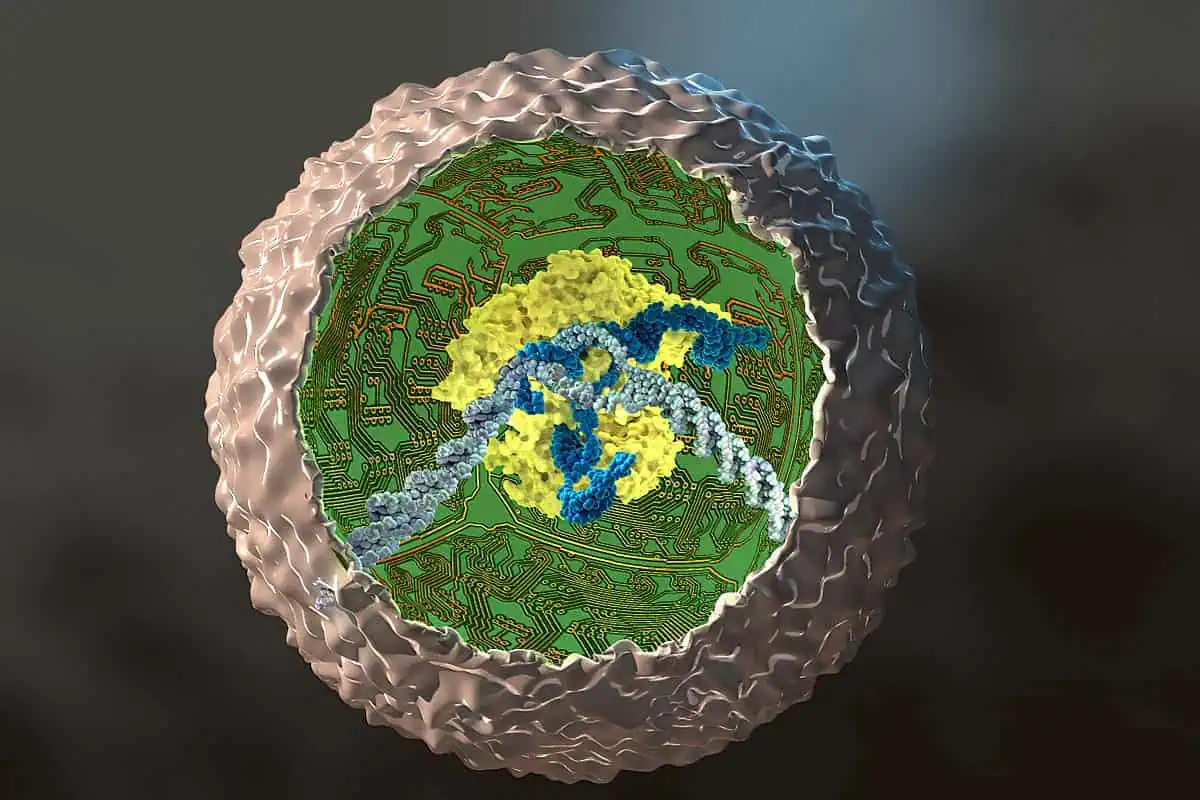


What are Synthetic Biology Circuits?
Synthetic biology is a way to engineer cells to perform functions for user-defined behavior in living systems. For example, a cell would glow if a certain chemical is detected. This is commonly done by altering cells to express genes when triggered by a specific input. These circuits are made up of three modules–a sensor, actuator, and signal processor. The sensor module is the input. It converts chemical/physical messages outside of the cell into internal cell signals, which are then interpreted by the signal processing module. The actuator module is the output. It converts processed signals into physical activities. The signal processing module tunes the input-output relationship and is necessary to achieve complex functions.
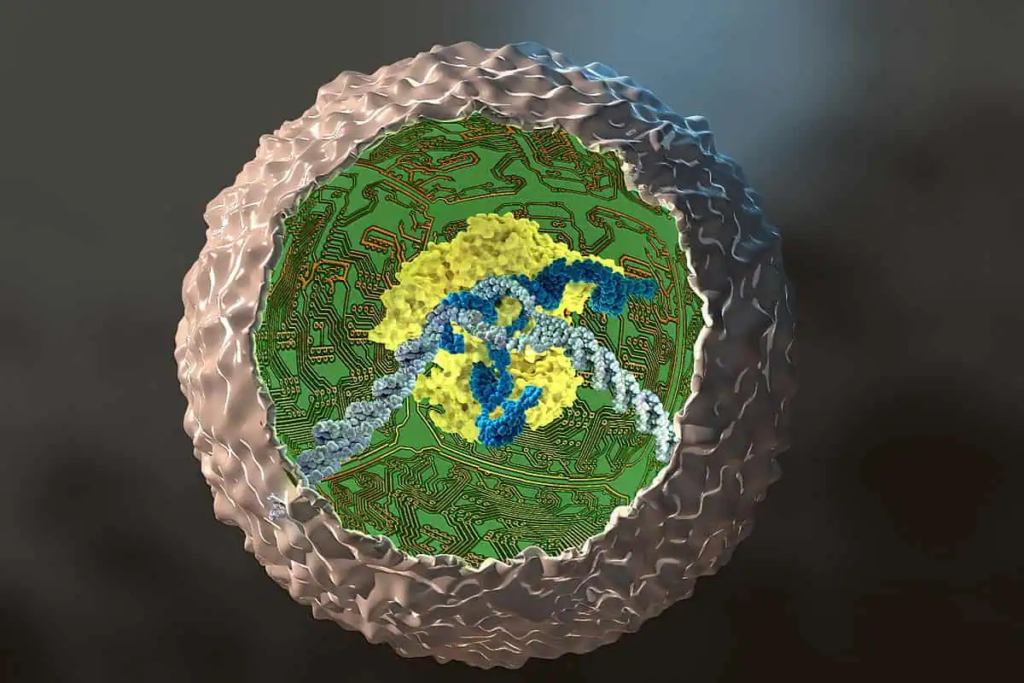
An interpretation of a circuit cell. VIA Ella Marushchenko
What is the Significance Today?
Commonly, these circuits have been programmed to diagnose and treat diseases, produce high-value chemicals and materials, improve crop yields, and monitor environmental contaminants. But researchers led by Ph.D. student Keren Roas and Dr. Lior Nissim aimed to solve a practical problem: “how to make a human cell respond only when it sees the right combination of signals.” For example, a cancer-targeting cell should not attack after identifying one suspicious molecule–it should wait for several signs that point at the disease. To solve this issue, researchers found that RNA trans-splicing was the key. RNA (ribonucleic acid) is a working copy of genetic instructions. Trans-splicing is when pieces from separate RNA molecules are joined together, which then creates a new message the cell is able to easily read. In addition to RNA trans-splicing, synthetic microRNAs were also added. Synthetic microRNAs are small RNA molecules that are able to silence specific messages.
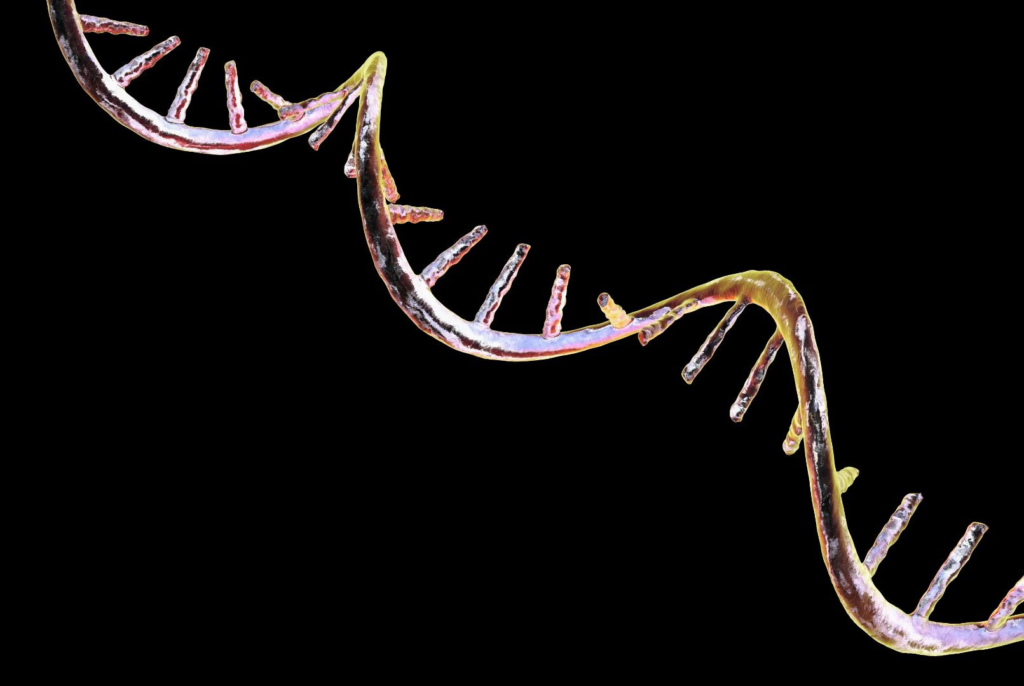
An image of mRNA. VIA SynBioBeta
Gates were also utilized–gates are a basic operation in which a cell only produces an output when two inputs appear together. A hybrid promoter–genetic switch that optimizes gene expression when genes turn on was added. Finally, a warning signal was built in. When a cell received two commands happening simultaneously (a confusing instruction), it produced a separate alert instead of continuing as though nothing happened.
What the Future Holds
The most efficient engineered circuits were under lab controlled conditions. Researchers note challenges ahead, including: limiting leaky genetic switches, avoiding unwanted RNA interactions, and finding secure ways to insert larger circuits into cell genomes. A future circuit in a patient would need to be able to ignore false alarms, act only in the right tissue, and read confusing signals. This is vital regarding cancer, autoimmune disease, and metabolic disorders, because they all involve a combination of signals to be identified. They rarely show up with a single marker. A future circuit may check several disease clues before activating an immune response, shutting itself down, or releasing a drug. A future in which cell therapies sense disease patterns and release treatment only under the correct conditions is up-and-coming!
If you would like to learn more about programmable cell circuits, look into these following sources:
